
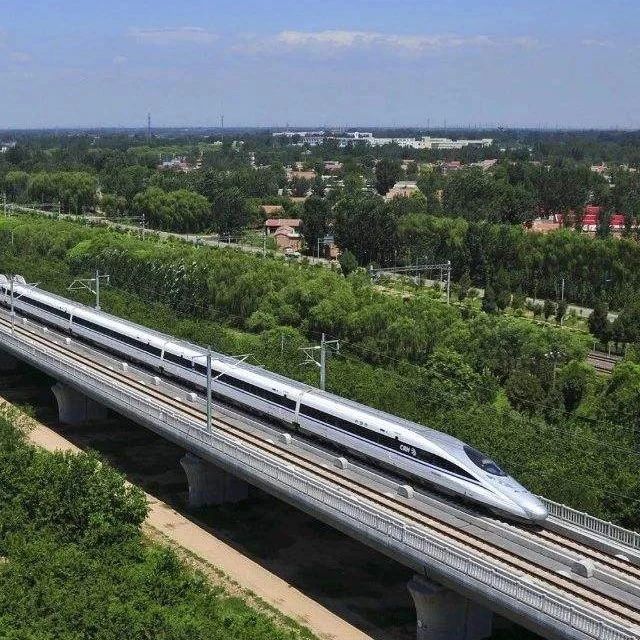
The Prelude to a High-Speed Empire
China, a leading nation in high-speed rail construction, now boasts an impressive network exceeding 42,000 kilometers, marking its status as a global high-speed rail powerhouse.
High-speed railways have become more than just a means of rapid travel; they offer a new perspective on China’s vast and beautiful landscapes. In this context, the concept of the Lanzhou-Chongqing High-Speed Rail is a significant component in this expansive journey.
The Vision of Lanzhou-Chongqing High-Speed Rail
Envisioned as a vital link connecting Lanzhou, the jewel of Northwestern China, with the southwestern metropolis of Chongqing, this rail line aims to be part of the national “Eight Vertical and Eight Horizontal” high-speed railway network, with hopes of completion by 2030.
However, despite early attention, this project remains in the planning stages, risking becoming a forgotten chapter in the annals of China’s high-speed rail history.
Looking back, a railway between Lanzhou and Chongqing has been operational since 2014. Spanning 886 kilometers, this route, designed for speeds of 160-200 km/h, primarily serves freight transportation, leaving much to be desired for passenger travel expectations.
As the desire for faster travel grows, the demand for a high-speed railway operating at 350 km/h has intensified.
Strategies for the Lanzhou-Chongqing High-Speed Rail
In December 2020, the China Railway First Survey and Design Institute proposed three strategies for the Lanzhou-Chongqing line: the Western, Central, and Eastern routes, each with its unique challenges and characteristics, sparking intense debate over the choice of route.
The Western Strategy
This plan builds upon the existing Lanzhou to Chengdu high-speed rail framework, extending 450 kilometers from Sichuan Principal Temple to Mianyang and connecting to the Suining to Chongqing section.
Estimated at 720 billion yuan and spanning 1011 kilometers, it represents the most cost-effective of the three strategies. Its core philosophy is to leverage existing rail assets to reduce the need for new construction, thus saving costs.
However, it covers fewer cities, potentially limiting its economic impact. Despite its shorter length, the projected journey time of 5 hours might not appeal to passengers seeking faster travel.
The Eastern Route
Starting from Lanzhou, this route includes cities like Dingxi, Hanzhong, Bazhong, Tianshui, and Nanchong, culminating in Chongqing West.
Complex in its design, it stretches 929 kilometers and requires a staggering 150.6 billion yuan, nearly double that of the Western route.
Its advantage lies in connecting numerous economic hubs and densely populated areas, potentially attracting a large number of passengers. However, the route’s indirectness might prolong travel time, and crossing several ecologically fragile areas poses significant construction challenges and environmental risks.
The Central Route
Bridging Lanzhou with Chongqing West, this line passes through Dingxi, Tianshui, Guangyuan, and Nanchong.
Seemingly striking a balance, it combines the advantages of the other two routes while avoiding their pitfalls. Estimated at 869 kilometers, it requires 141 billion yuan in funding.
Its design aims to balance economic and operational efficiency, promoting regional prosperity while ensuring timely travel. However, the route’s complex geography, especially in areas prone to soil erosion, poses significant construction and maintenance challenges.
Diverse Perspectives and Uncertainties
Opinions vary among the regions; Gansu favors the Eastern route, while Shaanxi opposes it. Sichuan and Chongqing lean towards the Central route, but disagreements persist regarding the implementation specifics.
Currently, the Lanzhou-Chongqing high-speed project awaits formal approval and has not yet been included in the national railway plan. Despite clear demand, its execution faces numerous obstacles.
The existing Lanzhou-Chongqing and Chengdu-Lanzhou lines continue to meet basic transportation needs. Whether the Lanzhou-Chongqing high-speed project will materialize as planned or remain an unfulfilled dream in China’s high-speed rail history is still uncertain.
However, if stakeholders collaborate effectively, the Lanzhou-Chongqing high-speed line has the potential to become a vital transportation link between Northwest and Southwest China.
中华大地,身为高铁建设的翘楚,现已拥有超越42,000公里的轨迹之长,荣膺全球首屈一指的高铁帝国。
高铁不只是人们迅疾出游的工具,同样也变成了领略中华大好河山的新途径。基于这种格局,兰渝高铁的设想,明显是这一浩渺进程中的显著环节。
兰渝高铁的雏形是将中华的西北明珠兰州与西南大都市重庆联结,作为国家“八纵八横”高铁大道的组成部分,期望于2030年竣工。
但是,纵使此项工程在早期被众多眼光所瞩目,至今它仍仅是纸上谈兵,成为了我国高铁史册上的一个遗落之笔。
追溯往昔,兰州与重庆两地,早已有一条于2014年启用的轨道,名为兰渝铁路。
此线路全长886公里,设计的速度为160-200公里,主力服务于货物运输。但对众多旅客来说,这样的疾行仍旧无法满足他们的旅途期望。
直到现在,随着人们对迅速出行的渴望不断加深,一条风驰电掣350公里/小时的高铁的呼声已越发高涨。
为了答应这一召唤,中铁一院于2020年12月公布了兰渝高铁的三种筑路策略:西线、中线及东线。每种策略都各具特色和试炼,但这也导致了所经之地在方案选择上出现了激烈的争论。
西线策略,基于现存的兰州至成都的高铁蓝图,再行扩充,在川主寺到绵阳之间延展450公里的钢轨,并与遂宁到重庆段相连。
这种策划预计需投入7200亿元,总长1011公里。显而易见,这是三种策略中最为精打细算的。
其骨干理念是深度开发和应用已有的铁路资产,以削减新筑的部分,进而达到节约成本的效果。
这明显地给了政府和投资者一个更加务实的选择。然而,背后的困惑也随之呈现。
该策略覆盖的都市较为有限,难以为该区域经济带来足够的推动力。
并且,尽管路程较短,但预测的行驶时长却达到5小时,这对于追求风驰电掣出行的旅客,或许是一大挑战。
东线的初始点均为兰州,但其经略的都市包括定西、汉中、巴中、天水、南充等,终站在重庆西之地。
此径路构思繁复,总程达到929公里,而所需的经费高达15060亿元,近乎是西途设计的双倍之数。
东途的显著之处,在于其途径了诸多的经济枢纽及高密度的居住带,一旦竣工,预期能吸纳众多的旅客。
然而,其所面临的考验亦颇为严峻,路线较为迂回,或会增加旅程时长。
尤为关键的是,此线要跨越若干生态脆弱区,这或给筹建带来难题,同时也有对自然的隐患。
至于中线设计,则始于兰州,中途会触及定西、天水,再南下,经广元、南充,最后抵达重庆西之地。
此线仿佛寻得了均衡之处,既结合了前述两设计的优势,又规避了其困境。估算此线全长约869公里,所需资金为14100亿元。
中途的构思是为了在经济与效益中寻得均衡。它能推进地区的经济昌盛,同时确保了运行的适时性。
但此线的地理环境颇为繁杂,尤其是黄土流失的挑战,恐在建造及后续的保养中都会遭遇诸多的问题。
于这三个构思中,各地的立场并不一致。甘肃更偏好东线设计,而陕西却持反对态度。四川与重庆则青睐中线,但在实施的具体方案上还有异议。
实则,兰渝铁路快线项目如今仍未获得正式的批准,亦未列入国家铁路策划。
尽管众方对此项计划的需求清晰,但在执行中却碰到了许多的障碍。
目前,已有的兰渝路线与成兰路线仍能应对两地的基本运输需求。
在这背景之下,兰渝铁路快线项目能否按计划完成,还是会化为泡影,留下中国高铁建设史上的遗憾,仍是个未知。
但肯定的是,只要各方能协同合作,共同推进此项目的实践,兰渝铁路快线或有机会真正化为连接中国西北与西南的关键交通纽带。
Leave a Reply