
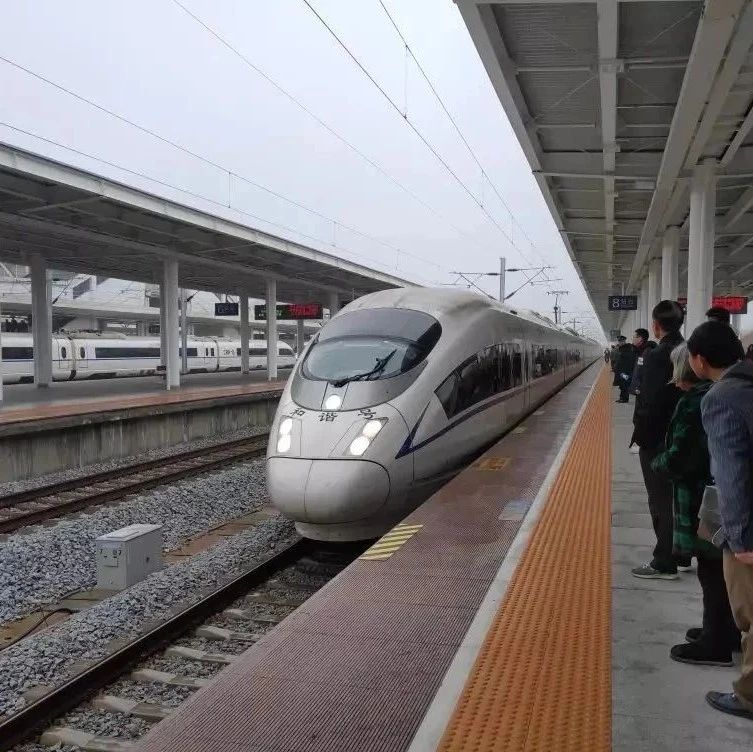
The selection of the site for the Shaoyang North high-speed railway station in Hunan Province has been controversial, drawing dissatisfaction from both the central government and local residents, who refuse to use it.
Located in Pingshang Town of Xinshao County, the Shaoyang North station stands isolated, despite being a hub on the Shanghai-Kunming high-speed line. People had hoped it would be bustling like other railway stations, but it seems more like a neglected corner, with locals feeling somewhat detached.
The reason for this is not far-fetched. The geographical choice of Shaoyang North seems quite arbitrary. Its location and surrounding transportation facilities are less than ideal, making it an unpopular area. Some jokingly call it the “South Station of Lengshuijiang” because it is closer to Lengshuijiang than to Shaoyang.
The Shanghai-Kunming high-speed line is a vital transportation artery in China, connecting Shanghai and Kunming and passing through several provinces including Zhejiang, Jiangxi, Hunan, and Guizhou. It serves as a fortress in the east-west direction. The line, which was laid out in 2010, spans approximately 2,200 kilometers with a design speed of up to 350 km/h.
With such a significant railway, the positioning of each station was meticulously planned. So, why is Shaoyang North such an enigma? Initially, there were three potential plans within Hunan Province, two of which involved Shaoyang City. The city’s residents had high expectations, believing it would bring them transportation convenience and possibly spur economic growth.
However, at the end of 2008, the decision to build the station not in Shaoyang City but in Pingshang Township of Xinshao County shattered these dreams. This choice puzzled the public: why would such a crucial transportation hub not be located at the city center?
For residents of Shaoyang, traveling to Shaoyang North means extra cost. But people in Lengshuijiang and Xinhuá had different responses. They were satisfied with the station’s presence, believing it would bring unprecedented convenience, especially for Xinhuá, a national poverty-stricken county, hoping the railway would stimulate local economic growth.
With various considerations, the Ministry of Transport decided to build the Shaoyang North station in Pingshang Township of Xinshao County, undertaking several strategic safeguards like ensuring regional highway connections, striving to carve it into a transportation hub.
Externally, it seemed the decision balanced Shaoyang with Lengshuijiang and Xinhuá. But how effective was it?
Looking at the current situation, Shaoyang North station’s operations have not met expectations. Many locals do not see it as their first choice for travel. The reasons are clear: although it occupies a corner on the Shanghai-Kunming high-speed rail map, its relatively remote location and the underdeveloped nearby transportation system increase both the cost and duration of travel.
The public wonders: why would a high-speed rail station be located in such an inconvenient place? However, the dilemma is not just about the location. Behind Shaoyang North station lies a decision-making puzzle involving political, economic, social, and cultural dimensions. In this broad picture, balancing interests is indeed challenging.
From the Shaoyang North station incident, we learn a valuable lesson: when dealing with such major projects, it’s essential to stay close to the real situation and extensively gather public opinion. The decision-making process should be transparent, and every corner’s voice should be included.
Only then can decisions stand on a reasonable platform, avoiding the mistakes of “blind” site selection like Shaoyang North station.
Shaoyang North station not only represents a choice of location but also reveals a societal topic involving multiple interests and complex decision-making. Looking ahead, similar decisions should place greater emphasis on public participation, striving for strategies that truly benefit the public.
Leave a Reply