
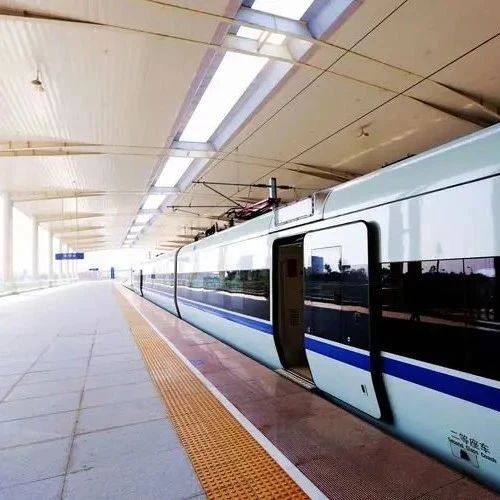
The Allure and Challenges of High-Speed Rail Travel
In China, high-speed rail symbolizes astonishing velocity and powerful momentum, evoking images of swiftly traversing the vast north-south expanse. People fantasize about high-speed rail travel as an instant leap over great rivers to distant places.
However, the real challenge is not the speed of the high-speed train itself, but rather the journey to the temple of speed – the high-speed rail station. If the station is located on the outskirts of the city, like an isolated island, then the journey through the city might take longer than the high-speed journey itself.
Sichuan’s Shehong County: A Focal Point of Transformation
Under this context, Shehong County in Sichuan Province has become a focal point of attention. Previously, Shehong’s transportation was inadequate, and experiencing a rail journey often meant a long road trip. But now, a new railway line – the Mian-Sui Internal Railway – is set to change all that. This line will connect Shehong with major surrounding cities, stretching nearly 200 kilometers, with an estimated construction period of three years and a design speed of up to 350 km/h.
The construction of this new railway not only endows the residents of Shehong with the power to traverse time and space but also has sparked significant interest among businesses. Numerous well-known companies are vying to invest in the project, with total investments amounting to billions, reflecting the project’s substantial impact on the economy of Shehong and its surroundings.
Shehong High-Speed Rail Station: More Than Just a Transit Point
For the residents of Shehong, the location of the high-speed rail station is crucial. After numerous discussions and evaluations, the decision was made to build the station at the western end of Shehong City, just 1.8 kilometers from the city center. This decision effectively addresses the needs of the citizens, making it easier for them to access the station.
The soon-to-be-completed Shehong High-Speed Rail Station is more than just a boarding point; it is a transportation hub that merges modern design, humanistic care, and green concepts. Upon entering the station, visitors immediately sense the designers’ unique insights into detail and innovation. The spacious waiting hall, comprehensive facilities such as self-service ticket machines, clean restrooms, and comfortable waiting areas are fully equipped. The food plaza offers a variety of delicious options, providing a feast for travelers waiting for their trains.
Moreover, the construction of the Shehong High-Speed Rail Station (四川射洪县)makes full use of smart technology. Everything from electronic information displays to self-service equipment greatly facilitates the passengers. Here, tasks like ticket purchasing and schedule checking are simplified and convenient.
In terms of architectural aesthetics, the Shehong High-Speed Rail Station exhibits a minimalist beauty. Its sleek external lines and practical yet modern interior installations reflect a cutting-edge and functional design philosophy. Notably, the station follows the trends of green and energy-saving materials, setting a standard for global green travel and environmental protection.
But the significance of the Shehong High-Speed Rail Station goes beyond being a simple transport node. It symbolizes the future urban blueprint and development prospects of Shehong. It is anticipated that with the operation of the high-speed rail, Shehong will experience a renaissance in its economy, culture, and technology sectors, attracting numerous entrepreneurs, businesses, and explorers, and transforming Shehong into a key hub for transportation and economic activity.
In summary, the Shehong High-Speed Rail Station is not just a point of convergence for travel; it is a promise and hope for the city’s future. This case demonstrates to the world how well-planned station locations can meet the needs of citizens and propel urban development. Such an example undoubtedly offers valuable inspiration for global urban construction, with the hope that in the future, high-speed rail station layouts will better align with human needs, fostering joint progress for cities and their residents.
Leave a Reply